




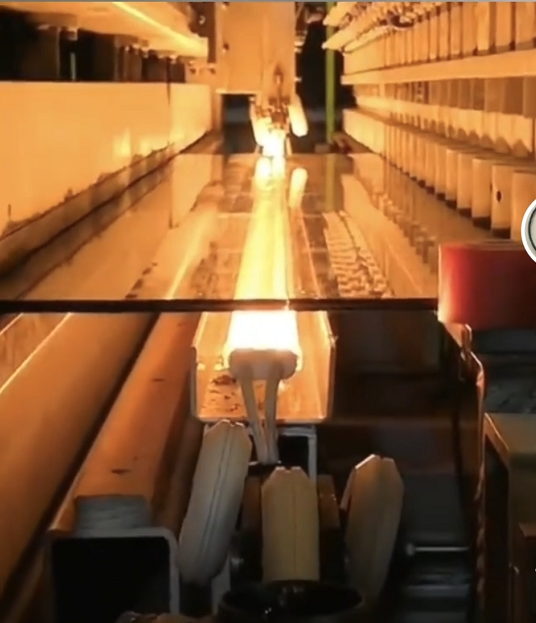
Cutting through ultra-thick glass is a brutal process. If the glass is cold and stiff, your cutting wheels are basically fighting a war against the material. You can hear it, you can feel it—and you definitely see it when the wheels chip or burn out way sooner than they should. We found a better way to handle this using shortwave infrared (SWIR) lamps. Instead of heating the whole slab, we aim the heat exactly where the cut is going to happen. Here’s the thing about thick glass: it’s a heat sink. Standard heaters just warm the surface, while the core stays cold and rigid. But shortwave IR is different. It actually sinks deep into the silica. We aren’t trying to melt the glass here. We just want to nudge the temperature up enough to relax those molecular bonds. It makes the glass feel less like a brick and more like something the tool can actually work with. And that’s where the magic happens for your tools. When the wheel hits that softened path, it doesn’t grind. It glides. The physical stress on your diamond or carbide tips drops instantly. This means you aren’t swapping out wheels every few hours—you’re getting way more linear meters out of every single tool. Of course, you can’t just slap these lamps on and walk away. You have to get the positioning just right. If the lamps are too close, you’ll overheat the surface. That leads to thermal shock, and that’s how you end up with a slab that cracks spontaneously. Too far away, and you lose that deep penetration. It’s all about finding that sweet spot between wattage and distance so the heat hits the core. To make it easier, we suggest using a fast-response PID controller. It keeps the temperature steady while the cutting head is moving, so the glass stays perfectly softened from the first inch to the last.