
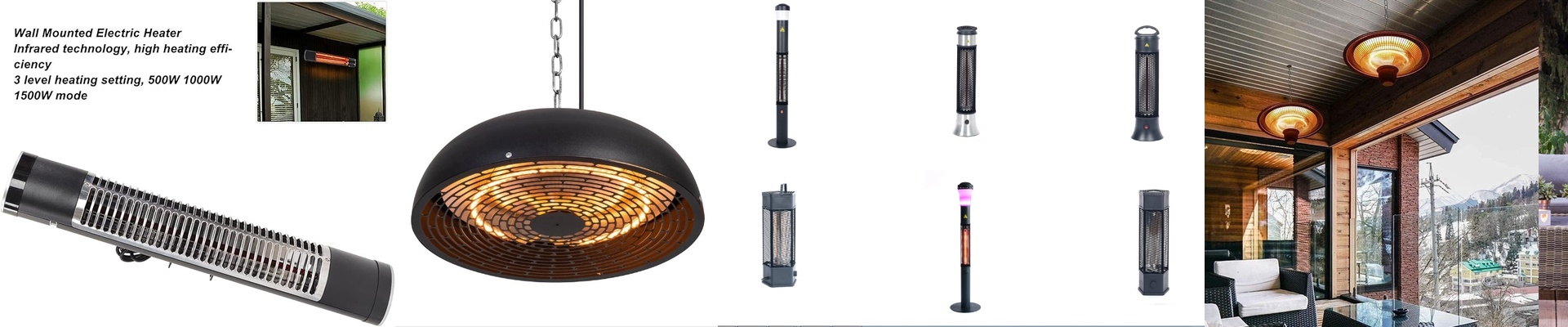
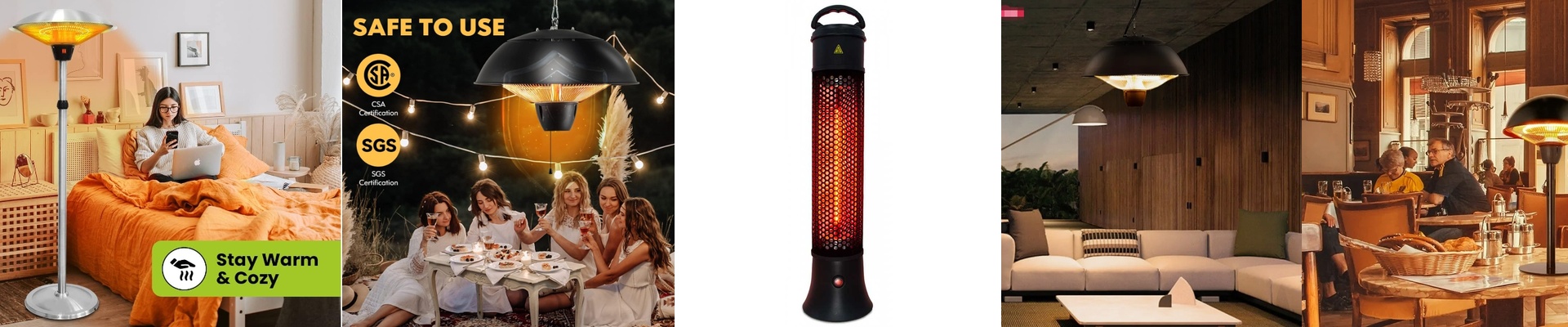

Outdoor evenings don’t have to end when the temperature dips. The problem is when the heat feels thin—wind steals it, the air stays cold, and the patio turns into a place you pass through instead of a place you settle into. We built this around a simple goal: make warmth behave like a system, not a guess.
What matters, technically
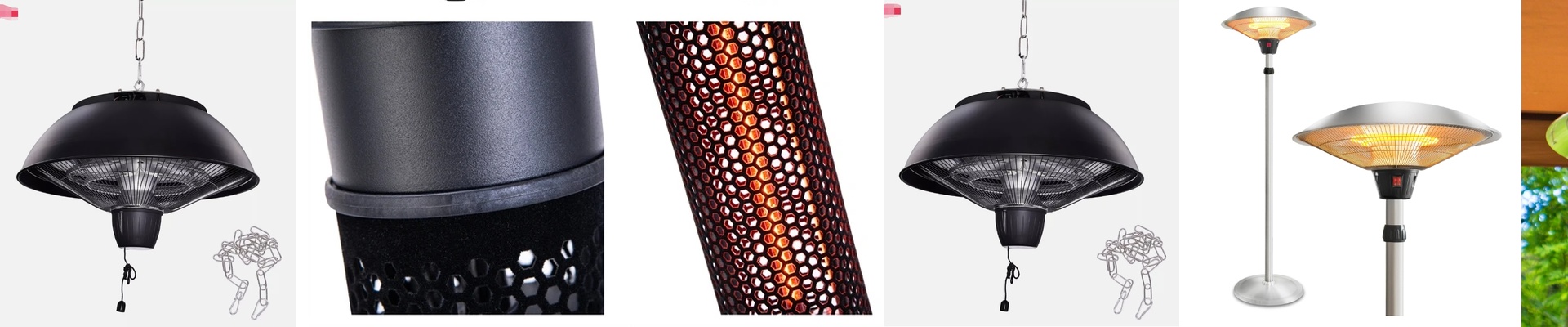
Far infrared heaters deliver radiant heat, warming people and objects directly instead of trying to heat the air around them. In practice, you feel the warmth within seconds of turning the unit on, and it stays consistent even when a breeze moves through. The core is a carbon fiber heating element paired with a high-emissivity quartz tube—chosen for stable output and long service life. The heater runs on standard 120V (or 230V, depending on the model), draws 1500W, and is built for outdoor use with an IP55-rated enclosure to handle rain and dust. A built-in thermostat and tip-over protection keep operation straightforward and safe.
Why this approach works out there
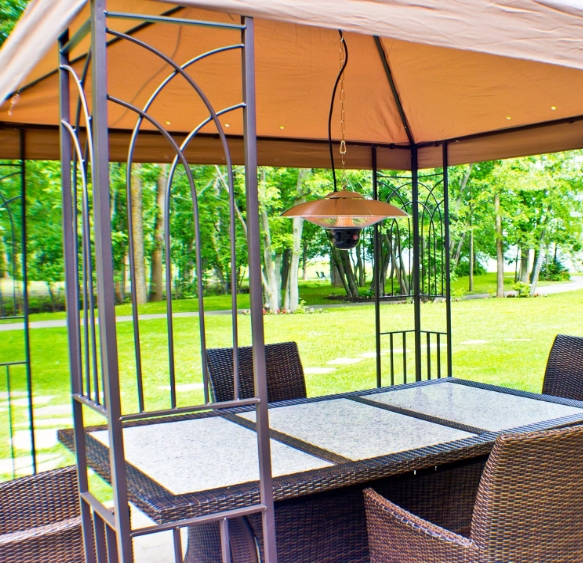
This is a natural fit for patios, decks, covered porches, and outdoor seating because the warmth is directional and controllable. You get comfort where people sit—over the chairs and table—without turning the ceiling into a hot box or blowing air that stirs up dust. Energy use stays focused, so you can extend outdoor time without watching the utility bill climb. The payoff is fewer cold spots, fewer drafts, and a more predictable feel from the first drink to the last.
The details that make the difference
Placement matters. For the best mix of coverage and comfort, mount the heater 7–9 feet above the floor and angle it toward the seating zone. Clearance to combustible materials has to be maintained per the manual—no cutting corners. Because radiant heat warms surfaces, the floor and nearby walls can absorb warmth and end up feeling noticeably toasty. Plan for that when you position furniture.